


Standard of Behaviour
A Standard of Behaviour is a teaching model rather than a mandate for behaviour. The emphasis is on teaching rather than telling, nurturing rather than sanctioning and including rather than excluding.
Developed by a broad cross-section of the community, the objective of this Standard of Behaviour is to ensure to the fullest extent possible, the provision of a “safe and caring community” for all involved with the Pembina Trails School Division.
View the Standard of Behaviour brochure here or the web version below.
For a summary of student, family, and staff responsibilities from the Standard of Behaviour, view the Standard of Behaviour one-pager.
The Standard of Behaviour is a front-facing document for the Student Code of Conduct policy.
Pembina Trails School Division Standard of Behaviour
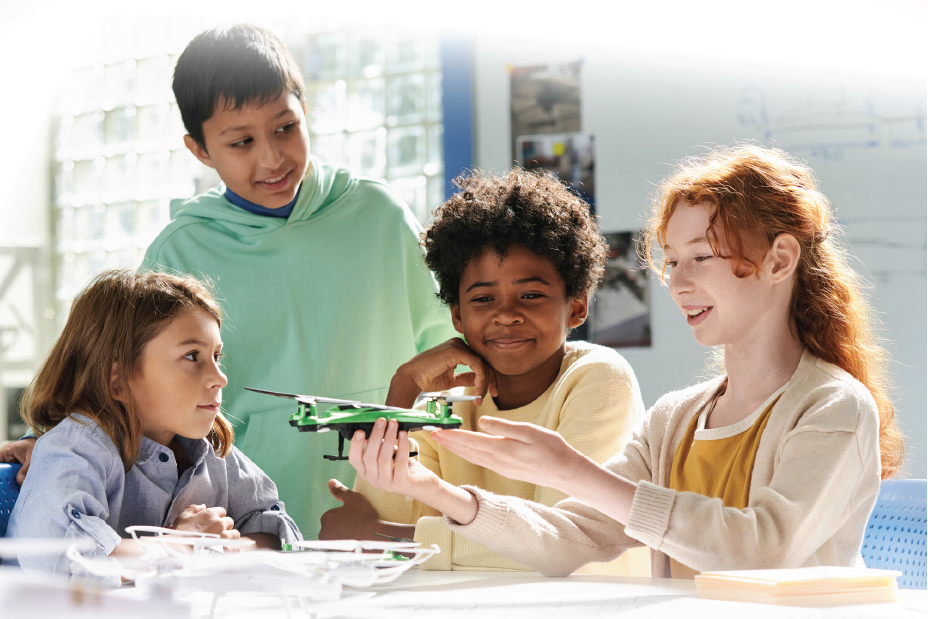
Pembina Trails is dedicated to providing learning opportunities that support individual growth, encourage our students to care for each other and the world in which we live, recognize and celebrate each of our unique and diverse gifts, and promote a sense of community and belonging, both in the division and in the world.
Creating a Safe and Caring Learning Community
Emotional, mental, and physical safety are essential to creating safe, caring, and inclusive school communities. Developed by a broad cross-section of the community, the Standard of Behaviour is a framework that supports student growth, inclusion, and a sense of belonging throughout Pembina Trails School Division.
“An equitable, inclusive, and diverse education system fosters a sense of belonging in all learners so that they feel they can succeed, take responsibility, find their purpose in life, and achieve The Good Life/Mino-pimatisiwin (Ininew)/ Mino Bimaadiziwin (Anishinabemowin)/honso aynai (Dene)/tokatakiya wichoni washte (Dakota)/minopimatitheewin (Anisininimowin)/(Inuktitut)/Miyo-pimatishiwin (Michif ).”
(Mamàhtawisiwin: The Wonder We Are Born With)
“As a commitment to Reconciliation and Anti-Racism, Pembina Trails School Division firmly believes that every student has the potential to achieve great things, regardless of their race or ethnicity. Through ongoing education and engagement with students, parents/caregivers and colleagues, we will work to promote anti-racism, respect for human diversity, and social justice in our school communities. We will actively listen to the voices and experiences of students and staff from diverse backgrounds and strive to create a learning environment that reflects and celebrates diversity. We are committed to creating safe and inclusive spaces for all students and staff, and to continuously learn and grow together.”
(Pembina Trails School Division Policy ACB and Policy AC)
“Inclusion is a way of thinking and acting that allows every individual to feel accepted, valued and safe. An inclusive community consciously evolves to meet the changing needs of its members. Through recognition and support, an inclusive community provides meaningful involvement and equal access to the benefits of citizenship. In Manitoba we embrace inclusion as a means of enhancing the well-being of every member of the community. By working together, we strengthen our capacity to provide the foundation for a richer future for all of us.”
(Manitoba Education and Early Childhood Learning Philosophy of Inclusion and Pembina Trails School Division Policy IFC)
“From every part of Manitoba, from every background, all children and youth matter, belong, and are respected, successful, and safe. The vision puts learners at the centre and requires focusing all talents, efforts, and resources on improving learner success. Learner success will look different for every child, but it always means they are prepared to reach their full potential and to live Mino-Pimatisiwin (The Good Life) in which they:
- have hope, belonging, meaning, and purpose
- have a voice
- feel safe and supported
- are prepared for their individual path beyond graduation
- have capacity to play an active role in shaping their future and be active citizens
- live in relationships with others and the natural world
- honour and respect Indigenous ways of knowing, being, and doing with a commitment to and understanding of Truth and Reconciliation”
(Mino-Pimatisiwin, The Good Life)

The Good Life in Manitoba's Indigenous Languages
- Mino-Pimatisiwin (Cree)
- Mino-matisiwin (Ininew)
- Mino Bimaadiziwin (Anishinabemowin)
- honso aynai (Dene)
- tokatakiya wichoni waste (Dakota)
- minopimatithewin (Anisininimowin)
- ᐃᓅᓯᖃᑦᑎᐊᕐᓂᖅ (Inuktitut)
- Miyo-pimatishiwin (Michif-Cree)
All students should experience:
- recognition of and the opportunity to develop their unique talents, skills, and qualities
- the freedom to learn new things in an environment of respect and acceptance
- effective instruction and appropriate educational programming
- freedom from harassment, intimidation (e.g. labelling, name-calling, ridicule, taunting, harmful criticism or contempt), and any actions that jeopardize emotional, mental, and physical safety
- freedom to express their ideas, provided their expression is respectful, responsible, and does not infringe on the rights or safety of others
- genuine care and concern from school staff
- a school environment where any behaviour intervention, response, or consequence will be administered in a manner that respects human dignity, repairs harm, and restores relationships and the school community
- accessible and supportive processes that allow for student voice and parent/caregiver support during behaviour intervention and response planning
All students are responsible for:
- compliance with the Standard of Behaviour (Code of Conduct – for students), and all other relevant policies and expectations of Pembina Trails School Division and its individual schools (Pembina Trails School Division Policy JIC)
- contributing to a positive learning environment to the best of one’s ability by attending and engaging in meaningful learning (Pembina Trails School Division Policy JE)
- expressing themselves with respectful and inclusive language and behaviour
- respecting the diversity of all school members and exhibiting behaviour that avoids all forms of intimidation, harassment, and discrimination of any kind (Pembina Trails School Division Policies ACB and AC)
- using electronic devices and technologies in an ethical and respectful manner (Pembina Trails School Division Policy IJNDC)
- showing respect for the rights, property, and safety of themselves and others
- assuming responsibility if school and/or division property is destroyed, damaged, or lost as a result of an intentional or negligent act (Pembina Trails School Division Policy JICB)
- actively participating in behaviour intervention and response planning to the best of one’s ability
- respecting the responsibilities of all staff members in fulfilling their duties as related to their roles
- promoting positive behaviour by fostering a culture of respect, inclusion, empathy, and peaceful interactions, ensuring the prevention of all forms of violence (Pembina Trails School Division Policy JICFB)
All staff are responsible for:
- modelling the Standard of Behaviour
- upholding Pembina Trails School Division Policies and Guidelines
- adhering to the tenets of legislation and job-specific codes regarding responsible, professional behaviour (e.g. Pembina Trails School Division Code of Conduct – for staff, Policy AAC, Pembina Trails School Division EA Handbook, MTS Code of Professional Practice, etc.)
- maintaining a safe and caring environment for students attending or participating in all activities that are sponsored or approved by the school, as related to their role
- working collaboratively and cooperatively with students, parents/caregivers, and colleagues, in person or via technology, in ways that are culturally responsive, traumainformed, and consistent with principles of equity, fairness, and respect for others (Pembina Trails School Division Policies AD, GBEBB, GBAA)
- using electronic devices and technologies in an ethical and respectful manner (Pembina Trails School Division Policy GBEE)
All teachers are responsible for:
- all the expectations outlined above for staff as well as:
- incorporating the principles of human rights and responsibilities, (including, but not limited to, Truth and Reconciliation, anti-racism, respect for human diversity, and inclusion) into their pedagogy and learning environments based on the ages and developmental stages of their students (Pembina Trails School Division Policies ACB, AC, and IFC)
- upholding the 5 Core Teaching Practices and referencing the Standard of Behaviour as a teaching tool for growth
- collaborating with parents/caregivers and school/divisional staff to develop and implement student-specific plans addressing learning needs (Pembina Trails School Division Policy IFC)
- communicating information about student behaviour to parents/caregivers and administration as needed (including, but not limited to, harmful and misuse of technology, bullying/cyberbullying, and other disruptive/severely disruptive behaviours affecting the school environment)
- reporting to the principal, as soon as reasonably possible, any concerns about nonobservance of Code of Conduct, harmful online behaviour (including AI generated content), or incidents involving bullying, cyberbullying, or other behaviour requiring intervention
- ensuring that any interventions, responses, and consequences used to maintain a safe and caring environment are fair and responsive considering how often and how serious the behaviour is, as well as the student’s age, developmental stage, and social-emotional and mental well-being
- seizing or causing to be seized and taking possession of any offensive/dangerous weapon brought to school by a student and entrusting it to the principal
- participating in, when directed by the principal, behaviour intervention planning and responses
All school principals are responsible for:
- all the expectations outlined above for staff and teachers as well as:
- annually reviewing the Standard of Behaviour and relevant Pembina Trails School Division Policies and Guidelines with staff
- ensuring that a school’s behaviour management policies, including behaviour intervention, response, and consequences for nonobservance of the school’s code of conduct, are consistent with any ministerial or policy directives
- supervising or ensuring supervision of buildings and grounds during school hours, checking for safety, repairs, and cleanliness
- removing or causing to be removed, unauthorized persons from the school premises who are causing a disturbance or interruption, who are trespassing, or who are present for a purpose not reasonably associated with the normal functioning of the school
- responding to reports of bullying and cyberbullying by supporting students and families to resolve issues, recognizing that incidents beyond school hours can affect school safety
- providing behaviour intervention and response, responsive to the needs of each student while they are in attendance throughout the school day, as well as while students are travelling to and from school, on school transportation, and during school related activities
- liaising with community organizations and agencies, as required, to support the development and implementation of responses and interventions
- ensuring that all interventions, responses, and consequences used to maintain a safe and caring environment are fair and responsive, considering how often and how serious the behaviour is, as well as the student’s age, developmental stage, and social-emotional and mental well-being
- notifying the parents/caregivers, as soon as reasonably possible, if the principal believes that a student has been harmed as a result of another person’s behaviour or any suspension involving the student in their care
- applying and upholding divisional protocol for parent/caregiver concerns and complaints (Pembina Trails School Division Policy KE)
Pembina Trails School Division is responsible for:
- providing professional learning around issues of understanding diversity, anti-bullying, anti-racism, acceptance and respect for others, and implementing the Standard of Behaviour
- implementing divisional policies in a respectful and caring manner that is inclusive of each member of each school community (including, but not limited to, the acceptable use of technology, anti-racism, and respect for human diversity)
All families are responsible for:
- supporting the student’s educational experience
- maintaining respectful and constructive interactions with all staff (aggressive behaviour, threats, or harassment will not be tolerated)
- helping the student maintain regular, consistent, and punctual attendance
- working collaboratively and cooperatively with the school team whether in person or via technology (Pembina Trails School Division Policy GBEBBA)
- reviewing and discussing the Standard of Behaviour and Technology Acceptable Use expectations, reinforcing respectful, ethical, and responsible use of technology both at school and at home as well as any additional policies or guidelines specific to their school
- following established protocol in expressing concerns or complaints (Pembina Trails School Division Policy KE)
- communicating with the school team regarding the student’s needs (academic, social, emotional and behavioural)
- assuming responsibility, with the student, where school and/or division property is destroyed, damaged, or lost as a result of an intentional or negligent act of that student
Public Concerns & Complaint Protocol (Policy KE)
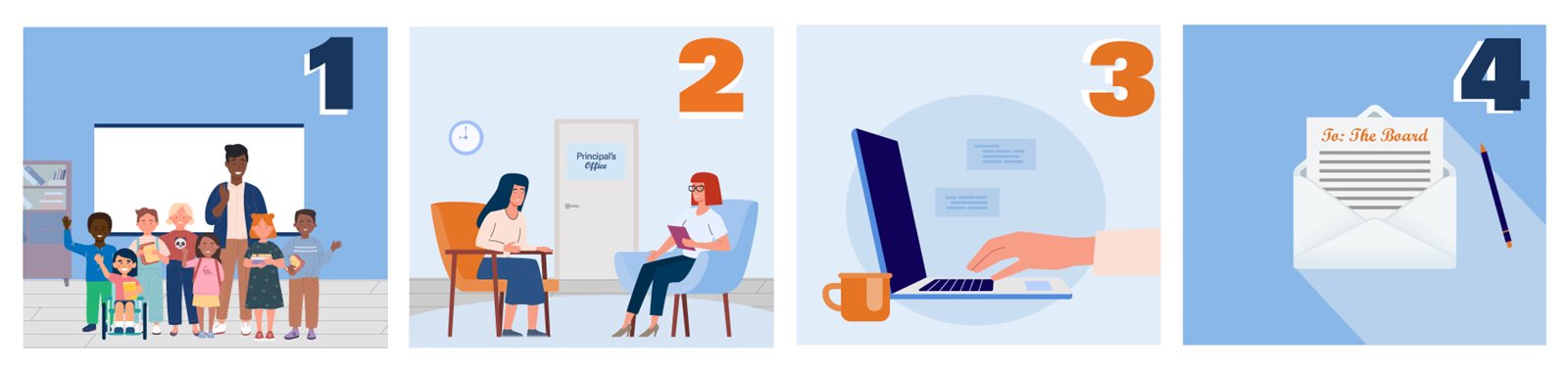
The Pembina Trails School Division Board believes that concerns and complaints are best handled and resolved as close to their origin as possible and in a timely manner. Therefore, the proper channeling of concerns involving instruction, discipline or learning materials will be as follows:
- Talk to the person most directly involved – the teacher.
- If talking to the teacher does not resolve the issue, make an appointment to discuss with the school principal.
- If talking to the principal does not resolve the issue, call or email the Superintendent’s department. Contact information on the next page.
- Appeal of a Superintendent’s decision shall be handled by the Board through written correspondence.
 For more information, please visit our website: pembinatrails.ca — Governance — Divisional Policies — Policy KE
Foundations of Behaviour
Pembina Trails views student behaviour as a form of communication and is addressed with care and support to help students learn and succeed. When behaviour concerns arise, Pembina Trails School Division prioritizes student safety and well-being, responding with a focus on relationships, learning, growth, and equitable support for those affected. Behaviour supports and responses are based on the student’s age and development stage and are always delivered with respect for each student’s dignity. Any disruptive behaviour involving neurodivergent students is handled individually, with a focus on the student’s unique needs, strengths, and inclusive supports.
Disruptive Behaviour
Behaviour that interferes with learning or creates an unsafe environment is considered disruptive. Each situation is reviewed in context to understand the student’s needs and inform the next steps.
Some examples of disruptive behaviour may include, but are not limited to:
- failure to honour and respect the agreements of the school/classroom community
- gossiping and spreading harmful information
- academic dishonesty or plagiarism
- passive support for the misconduct of others (being a bystander)
- other acts of misconduct that are disruptive to the classroom or school community or that cause, or have the potential to cause harm
- failure to adhere to Pembina Trails and school-based Technology Acceptable Use policies (Policy IJNDC)
Severely Disruptive Behaviour
Behaviour that significantly interferes with learning, threatens the safety of others, or damages school property may be deemed severely disruptive by the principal.
This behaviour includes, but is not limited to:
- chronic disruptive behaviour (a repeated pattern of behaviour concerns)
- disrespect, name calling, harmful words, phrases, or slurs
- physical violence/aggression or abusing another person verbally, in writing, electronically, sexually, emotionally, or psychologically
- harmful AI-generated content (e.g. audio, images, video, or text), including but not limited to:
- Cyber Flashing: When a person receives uninvited requests for sexual images or messages or is sent unsolicited sexual images or messages. (Canadian Centre for Child Protection, “Online Sexual Violence”)
- Doxing: Publicly releasing someone’s personal, identifying information, such as their name, address, phone number, email address, or school, online without their consent. This includes gender identity and sexual orientation.
- Sextortion: When someone threatens to release personal sexual images or videos of another person unless demands are met, often for money, more sexual content, or sexual favours. (Canadian Centre for Child Protection, “Sextortion”)
- Swatting: The deliberate, malicious, and illegal act or reporting a false crime or emergency to evoke an aggressive response from first responders or law enforcement agencies to attend someone’s residence or place of work.
- harmful use of the Internet, cameras, cell phones, and other electronic or personal communication devices (Pembina Trails School Division Policy JICJ)
- bullying: repeated targeting, intimidation, and exclusion of others by an individual or group, including various electronic communication, including social media, text messages, direct messages, websites, email, or using AI-generated content (e.g., audio, images, video, or text (cyberbullying) (Pembina Trails School Division Policy JICFB)
- vandalism (Pembina Trails School Division Policy ECAC) and/or damage to school property (Pembina Trails School Division Policy JICB)
- disruptions to school operations
- active encouragement for the misconduct of others
- sexual misconduct, including, but not limited to harassment, assault, trafficking, and/or aggression
- threats or actions that cause harm
- hazing (Pembina Trails School Division Policy JICFA)
- use or possession of any form of weapon
- using, possessing, selling, distributing, or being under the influence of alcohol, cannabis, or illicit drugs at school (Pembina Trails School Division Policy JICH, JICH-R)
- illegal activity
- gang activity
- harassment or discrimination on the basis of any characteristic set out in The Manitoba Human Rights Code
- theft
- self or peer exploitation
- smoking/vaping
Response to Behaviour
Student behaviour can be a way individuals communicate their needs, and these moments provide opportunities for learning and growth. Responses to behaviour consider each student’s unique needs and circumstances and are addressed under the guidance of the principal.
In addressing any behaviour concerns, responses shall:
- keep students at the centre of all planning and decisions
- prioritize restorative practices
- ensure a safe, caring, and inclusive learning environment for all that supports Manitoba’s Philosophy of Inclusion
- respect the right and access to education for children and youth
- acknowledge that student success and well-being is a collective responsibility and requires active agency on the part of all who are responsible for children and youth
- ensure that any behaviour intervention, response, or consequence is administered in a manner consistent with respecting the student’s human dignity
- implement divisionally supported behaviour interventions, responses, and consequences that are student-centred, culturally responsive, and trauma-informed
- reaffirm that relationships and trust matter in providing a sense of safety and belonging for all students
- be logical, realistic and timely
- be responsive to the student’s age and state of development and the student’s degree of social-emotional and mental wellness
- reflect the severity of behaviour and consider the frequency, duration, and intent of the behaviour
When these principles are not met, individuals or groups are supported through responses guided by Pembina Trails School Division that prioritize learning, accountability, and respectful restoration of relationships to the fullest extent possible.
Response Examples
Interventions, supports, and responses may be adjusted as needed to fit each situation. Decisions are made with care, based on the individual needs of each student.
In the event that a parent/caregiver disagrees with the way in which a teacher manages a situation that involves their child, there is an established process for communication and appeal. It is the division’s belief that complaints are best resolved as close to their origin as possible, beginning with the teacher and then administration in the school (Pembina Trails School Division Policy KE).
The following are examples of responses that may be considered in addressing harmful behaviour:
- discussion with those involved
- involvement of parents/caregivers and/or a trusted adult
- “reset” practices: withdrawal from class, removal of privileges, cooling off period, being picked up from school or sent home early
- withdrawal from course(s)
- restorative practices: restorative questions, community circles, opportunities for repair, conferencing, etc.
- formal meetings that may involve students, staff, families, and/or divisional personnel
- a plan that may include counselling, mentoring, or mediation
- restitution
- development and implementation of a supportive behaviour plan
- student services referral
- community involvement (external supports, organizations, or agencies)
- divisionally supported violence prevention processes (e.g. ARTS/ARTO)
- suspension: in-school or out-of-school, or for the remainder of the school year
- a suspension from the classroom or school building may be determined as an appropriate consequence when a student’s behaviour is found to be injurious to the school environment and/or deemed an imminent safety risk to students and staff. School suspensions can occur for up to five (5) days and divisional suspensions can occur for up to six (6) weeks.
- police notification
- managed move
- expulsion: involvement of school administration, Superintendent and the Board of Trustees is required
- discipline in the form of suspensions or expulsions are rare and can be appealed to the School Board (refer to the Pembina Trails School Division Policies KE, JKD, JKD-R and JKE-R).
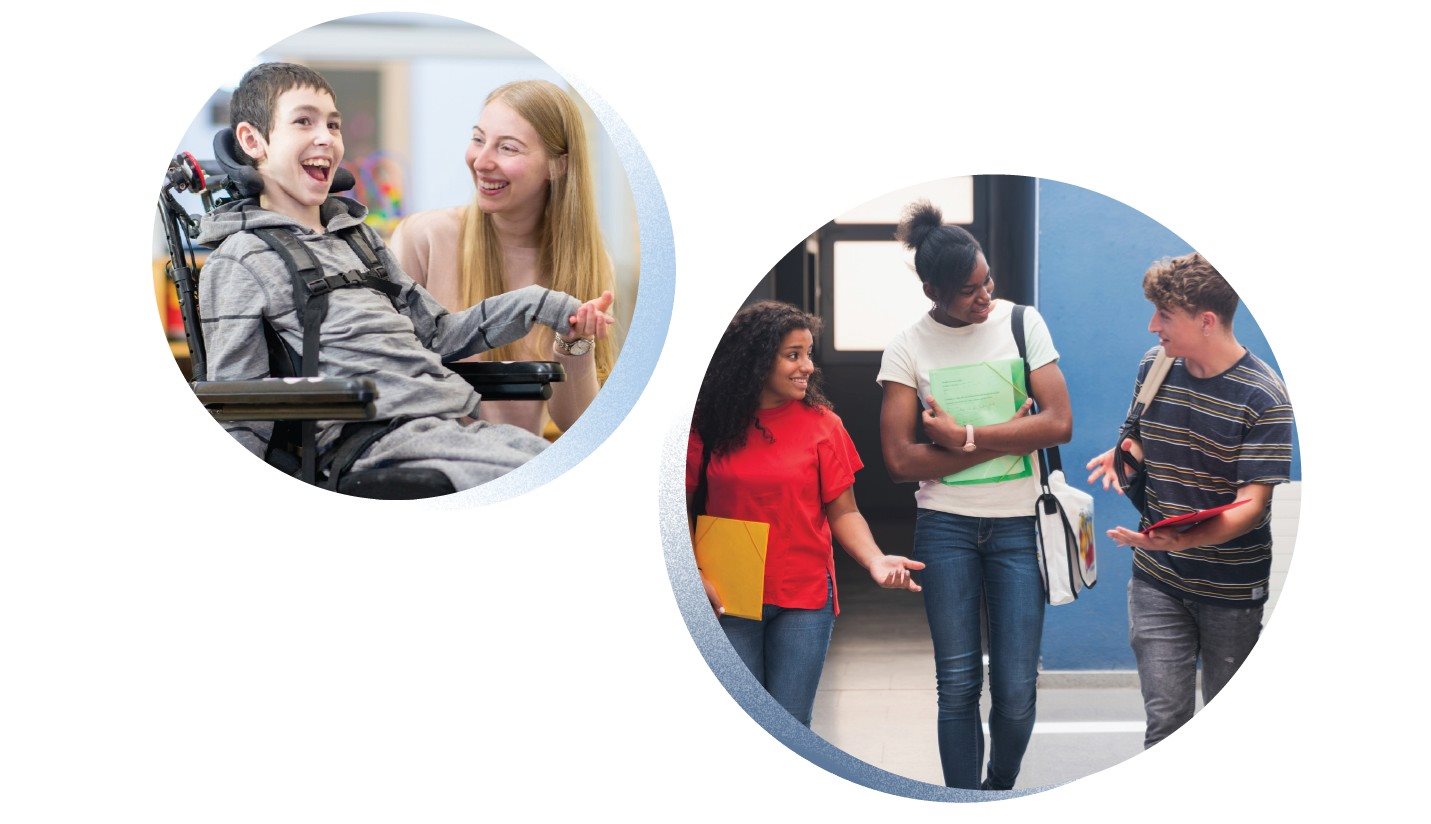
“We provide challenging learning opportunities that support individual growth, encourage our students to care for each other and the world in which we live, recognize and celebrate each of our unique and diverse gifts, and promote a sense of community and belonging, both in the division and in the world.”
- Pembina Trails School Division
5 Core Teaching Practices
- A commitment to student success, well-being, and learning: Pembina Trails teachers set expectations based on each student’s learning needs and act consistently in ways that support the student’s well being, growth, and success (Pembina Trails School Division Policies AD/ IA/ IFC).
- Fostering a safe and inclusive environment: Pembina Trails teachers foster inclusive, culturally responsive learning environments that value diversity, promote belonging and self-esteem, uphold human rights, challenge discrimination, and embrace the division’s philosophy of inclusion (Pembina Trails School Division Policies AC/ACB/IFC).
- Professional and responsive instructional practices: Pembina Trails teachers use proactive and responsive teaching practices, informed by Manitoba Education’s Framework for Learning, to support positive learning behaviours and create supportive classroom environments (Pembina Trails School Division Professional Growth Manual).
- Supporting student behaviour: Pembina Trails teachers will consistently model the Division’s Standard of Behaviour and promptly interrupt and address disruptive behaviours as they arise. Behaviour is always situational and responses should maintain the relationship with the student and focus on positive growth and development (Pembina Trails School Division Policy JIC).
- Restoring relationships and community: Pembina Trails teachers will provide the student(s) with the opportunity to acknowledge their responsibility in any behaviour intervention, repair the harm, and rebuild a sense of community (Pembina Trails School Division Policy JIC).
This framework is consistent with The Public Schools Act; The Human Rights Code; The Public Schools Amendment Act - Safe and Inclusive Schools; Manitoba Education and Early Childhood Learning Safe and Caring Schools Policy Directives, Provincial Code of Conduct, 2025. For policies related to the Standard of Behaviour document please visit the Pembina Trails School Division website at: www.pembinatrails.ca.
Established January 2006 | Reviewed January 2012 | Amended June 2014
Rebranded June 2016 | Amended April 2026

Please provide your question and email address in the fields below.
Your question has been successfully submitted.
CloseThank you.